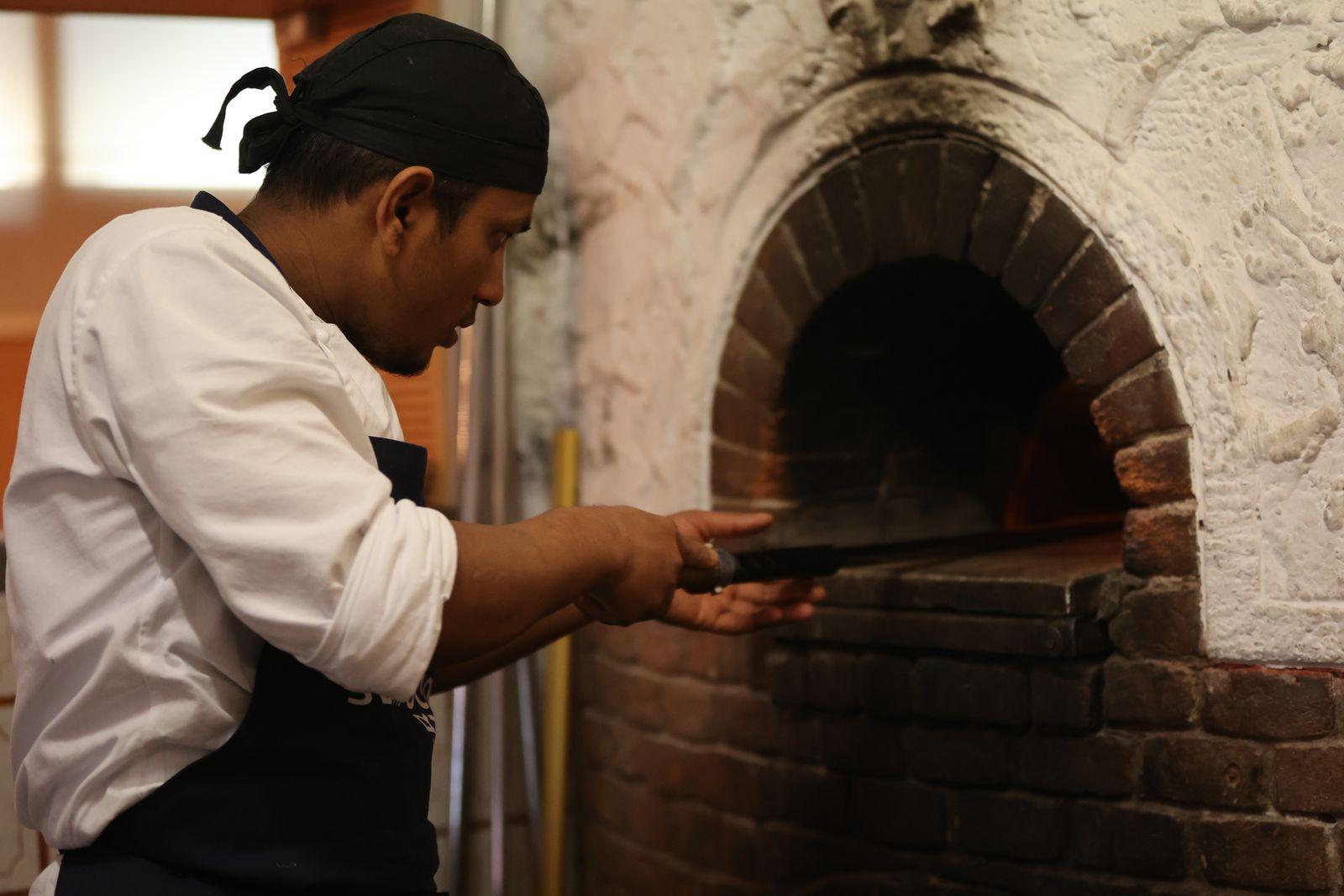
Pizza Oven and Line Package Loans: High-Heat Kitchen Financing
6 min readIllustrative guidance—not an offer
Pizza concepts concentrate a large share of their capital in a single appliance, the oven, and then surround it with dough handling, prep refrigeration, and a ventilation system sized to withstand serious heat. The oven choice affects flavor, speed, labor, fuel costs, and even the building permit. This guide compares deck, conveyor, and hearth options, shows how make-line refrigeration and dough equipment fit into the package, and explains how to finance a line that may cost $10,000 for a small refresh or more than $1,000,000 for a growing multi-unit brand.
Deck, conveyor, and hearth options
Deck ovens use stone or ceramic surfaces heated by gas or electricity and give a crisp, traditional bake. They require skilled operators who can rotate pies and manage hot spots, which suits neighborhood pizzerias that value craft. A double-stack gas deck oven commonly costs $8,000 to $25,000, with premium Italian imports reaching $40,000.
Conveyor ovens move pies through a heated chamber at a fixed speed, delivering consistent results with minimal training. They suit high-volume delivery and franchised concepts. Gas conveyor ovens range from $12,000 to $40,000, and the tunnel length determines throughput. Operators often run two ovens at peak times to avoid becoming a bottleneck.
Wood-fired and hearth ovens deliver a signature look and a quick, intense bake. They are visually striking, and they come with ventilation, fuel storage, and code complexity. Prices run from $15,000 for modest brick models to $60,000 or more for custom domes. Check local rules on solid-fuel cooking before committing, since some cities restrict it or require specialized suppression.
Matching the oven to your volume
Estimate peak-hour demand honestly. A conveyor oven with a thirty-two-inch belt can produce about fifty to ninety pizzas an hour depending on the recipe, while a single deck chamber might produce twenty to thirty. If your delivery windows concentrate sales into ninety minutes, the oven you choose must meet that peak, not the daily average.
Consider labor too. A conveyor allows a newer employee to produce consistent pies within a week, while deck ovens reward a seasoned pizzaiolo. Labor savings can offset a higher equipment price within a couple of years.
Fuel type affects both cost and installation. Gas is cheaper to run in many markets, but electric ovens avoid gas piping and can be easier in leased spaces. Ask your landlord what the building can support before you finalize the choice.
Make line and refrigeration
The make line is where speed is won or lost. A refrigerated pizza prep table with a raised rail holds toppings at hand, and a typical sixty-seven-inch unit costs $2,500 to $6,500. Undercounter refrigeration for cheese, sausage, and sauces adds $2,000 to $5,000 per unit. Marble or granite work surfaces are popular and add a few hundred dollars.
Dough equipment sits upstream. A spiral mixer, in sizes from sixty to one hundred quarts, costs $3,000 to $12,000. Dough dividers and rounders speed portioning and run $4,000 to $15,000. Dough proofing cabinets and retarding refrigerators help control fermentation and cost $2,000 to $6,000.
Think about workflow before you buy. A cramped layout can erase the benefit of a premium oven, and the dealer's layout drawing should show clearances, traffic paths, and the relationship between dough, make line, oven, and boxing station.
Ventilation and fire code
High-heat ovens need ventilation matched to their category. Many gas conveyor ovens are listed for use under a Type II hood or even without one in certain jurisdictions, while wood-fired and deck ovens with grease-producing toppings typically need a Type I system. Confirm with the manufacturer's listing and the local inspector.
Clearance to combustibles is a recurring problem in older buildings. Manufacturers specify minimum distances to walls and ceilings, and non-compliance can delay the certificate of occupancy. Choose a location that satisfies clearances without sacrificing line flow.
Budget for the ventilation as part of the pizza package, not as a separate afterthought. A mechanical contractor's quote that references the oven model gives funding reviewers a complete picture.
Illustrative package budgets
A compact takeout pizzeria might spend $45,000 to $85,000 on a conveyor oven, make line, undercounter refrigeration, mixer, walk-in or reach-ins, and ventilation. A dine-in concept with a hearth oven, bar equipment, and a larger refrigeration footprint can reach $150,000 to $300,000. A growing brand that standardizes its line across five stores may need $600,000 to over $1,000,000 for the first wave.
Payments scale in a predictable way. A $90,000 package over seventy-two months at an illustrative 8.5 percent costs roughly $1,600 per month, while a $250,000 package over eighty-four months at nine percent costs about $4,030.
Down payments make a visible difference. Putting twenty percent down on the $250,000 package trims the financed amount by $50,000 and reduces the payment by roughly $800 per month.
Delivery, rigging, and commissioning
Ovens are heavy. A double-stack deck unit can weigh over two thousand pounds, and rigging into a second-floor space requires planning. Confirm door widths, elevator capacity, and sidewalk permits for delivery trucks.
Factory technicians often commission conveyor ovens to calibrate temperature and belt speed. Schedule the visit when menu items are ready to test, and bake a full range of products so you can fine-tune settings before service.
Keep commissioning reports with your file. They document that the equipment was installed to specification and support warranty claims.
Energy, maintenance, and daily operating cost
An oven is a long-term commitment to a utility bill. A gas conveyor oven running twelve hours a day can burn through several hundred dollars of fuel a month, while electric models trade lower installation complexity for a higher bill in many regions. Ask the manufacturer for rated consumption and compare it to your local rates before you commit.
Maintenance protects the investment. Conveyor belts need cleaning and tension checks, burners need periodic inspection, and deck stones may crack if cold dough or water is dropped on a hot surface. A quarterly service visit costs a few hundred dollars and prevents breakdowns during the busiest weekends of the year.
Track the numbers for the first six months. Fuel cost per pizza, labor minutes per pizza, and waste percentage tell you whether the oven is delivering the economics you modeled.
Training the crew and protecting product quality
A new oven changes how the whole line works. Train staff on stretching, saucing, and loading so that each pie enters the oven in the same condition, and set clear standards for topping weights. Consistent portions protect food cost, and they keep bake times predictable.
Document your recipes with oven settings. Record temperature, belt speed or deck position, and time for each menu item, then post the table near the oven. New cooks learn faster, and a manager can diagnose quality problems by comparing actual settings against the reference.
Line package checklist
Before you submit your equipment list, confirm that the package is complete and consistent across quotes. Missing pieces such as a venting kit or a gas regulator can add unexpected costs late in the project.
- Oven model, fuel type, and installation requirements.
- Hood or ventilation quote tied to the oven listing.
- Make-line refrigeration with dimensions and electrical needs.
- Dough equipment, shelving, and smallwares schedule.
- Layout drawing showing clearances and traffic flow.
- Delivery and commissioning dates.
Frequently asked questions
Can I finance a used pizza oven? Yes, with documentation of condition, serial number, and fuel type. A technician's inspection helps confirm that burners, thermostats, and decks are sound.
Does the financing include delivery vehicles? Vehicles are typically separate from kitchen equipment, so keep them on their own request.
Can I phase the purchase? Many owners buy the oven and make line first, then add dough equipment and a second oven after opening.
How do I start? No credit check to inquire lets you share your list and compare payment structures, and credit from 500 to 800+ FICO is considered when you submit a formal file.
Related guides
Type I Hood and Fire Suppression: Financing and Inspection Readiness
Finance Type I hoods and fire suppression for commercial kitchens. $10k–$1M+. No credit check to inquire. RestaurantEquipmentFinancing.org.
Second Location Equipment Rollout: Financing Unit Two
Finance equipment for a second restaurant location. $10k–$1M+. No credit check to inquire. RestaurantEquipmentFinancing.org.
Turnkey Restaurant Packages vs. Custom Build-Out Financing
Compare turnkey restaurant equipment packages with phased build-out financing. $10k–$1M+. RestaurantEquipmentFinancing.org.